
Flood Insurance for Long Island Homeowners — NFIP, Private Options, and the Coverage Your Homeowners Policy Doesn't Include
Your standard homeowners insurance does not cover flood damage. It's one of the most common and costly misconceptions in personal insurance — and on Long Island, where barrier islands, South Shore bays, and tidal marshes put thousands of properties within reach of storm surge and heavy rain flooding, it's a gap that can be financially devastating. We help Nassau and Suffolk County homeowners understand their flood zone, compare NFIP and private flood options, and get the right policy in place before the next storm is already in the forecast.
Why Your Homeowners Policy Leaves You Exposed to Flood Damage
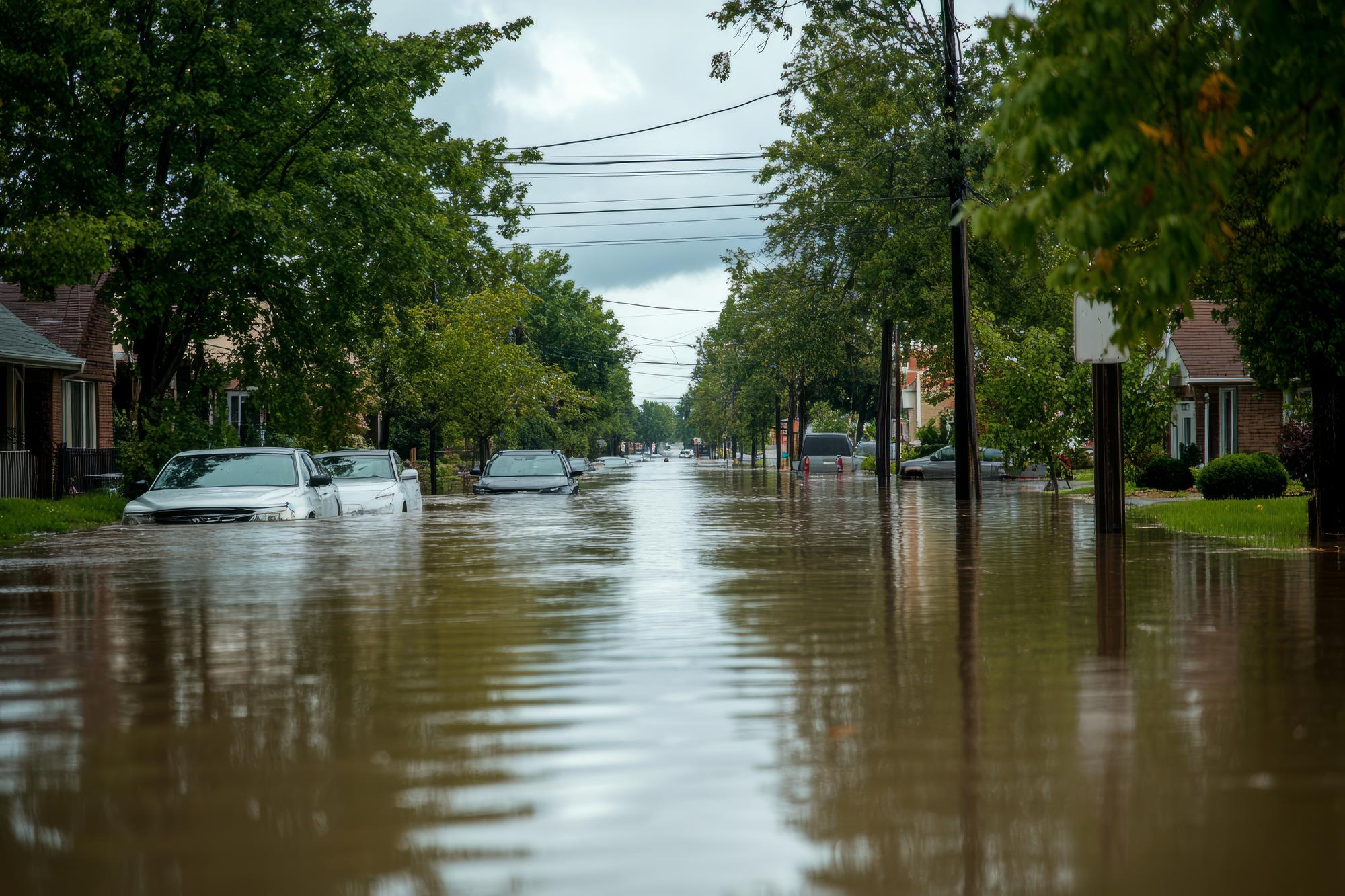
Flood damage is explicitly excluded from standard homeowners insurance policies — not buried in the fine print, but categorically excluded. Whether the cause is a nor'easter pushing water off the Great South Bay, a tropical storm overwhelming Nassau County drainage, or several inches of rain falling faster than the ground can absorb it, your homeowners carrier will not pay that claim. A separate flood insurance policy is the only way to cover the structure of your home and its contents against flood loss. For many Long Island homeowners, this isn't optional: if you carry a federally backed mortgage on a property in a high-risk flood zone, your lender is required to mandate flood coverage. But even outside mandatory zones, the financial exposure is real. One inch of floodwater causes an average of $25,000 in damage, according to FEMA — a figure that puts the cost of a flood policy in sharp perspective.
FEMA Flood Zones on Long Island: What Your Zone Actually Means
FEMA assigns every property in the country a flood zone designation, and that designation determines whether your lender requires flood insurance, how your NFIP premium is calculated under Risk Rating 2.0, and how significant your flood risk is considered to be. The zones most relevant to Long Island homeowners are:
- Zone A and AE: High-risk areas with a 1% annual chance of flooding (the "100-year floodplain"). Flood insurance is mandatory for federally backed mortgages in these zones. AE zones include detailed base flood elevation data that directly affects your NFIP premium.
- Zone V and VE: Coastal high-hazard areas subject to wave action in addition to flooding — common along Long Island's ocean-facing shorelines and barrier islands. These carry the highest NFIP rates and the most stringent building requirements.
- Zone X: Moderate- or low-risk areas outside the 100-year floodplain. Flood insurance is not mandatory here, but many Long Island homeowners in Zone X have experienced flood losses — particularly during major storm events when drainage systems are overwhelmed.
We look up your property's FEMA flood zone designation and walk you through what it means for your coverage requirements and your options. If you want to check your zone before calling, FEMA's Flood Map Service Center lets you search by address.
NFIP vs. Private Flood Insurance: Understanding Both Options
The National Flood Insurance Program is the most widely known source of flood coverage, and for many Long Island homeowners it remains a strong option — particularly for properties where NFIP's coverage limits are sufficient and where lender requirements specify an NFIP policy. But private flood insurance has expanded significantly in recent years, and for many homeowners it offers meaningful advantages worth comparing. Here's how the two options differ:
- Coverage limits: NFIP caps building coverage at $250,000 and contents at $100,000. Private flood policies often offer higher limits — important for homeowners whose replacement costs exceed NFIP's ceiling.
- Waiting period: NFIP policies carry a 30-day waiting period before coverage takes effect (with limited exceptions for lender-mandated coverage tied to a loan closing or community flood map changes). Private flood carriers typically have a shorter waiting period, often 10 to 15 days, though this varies by carrier.
- Loss settlement: NFIP pays contents claims on an actual cash value basis, which accounts for depreciation. Some private flood policies offer replacement cost settlement on both building and contents — a meaningful difference when filing a significant claim.
- Pricing: Private flood premiums are not subject to NFIP's rating structure and can be more competitive for certain property types and locations, particularly in moderate-risk zones.
As an independent agency, we access both NFIP and private flood carriers. We compare the options for your specific property and coverage needs — not just the premium, but the limits, the settlement terms, and the waiting period — so you can make an informed decision.
The 30-Day Waiting Period: Why Timing Matters More Than Most People Realize
One of the most consequential details in flood insurance is also one of the least understood: NFIP policies do not take effect immediately. There is a standard 30-day waiting period from the date of purchase before your coverage is active. If a storm is named and bearing down on Long Island when you call us, it is very likely too late to get an NFIP policy in place for that event.
There are narrow exceptions — coverage purchased in connection with a federally backed loan closing takes effect immediately, and coverage added after a community flood map revision may have a shorter waiting period — but for most homeowners purchasing a new NFIP policy, the 30-day rule applies. Private flood carriers often have a shorter waiting period, typically 10 to 15 days, though the same principle holds: flood insurance needs to be in place well before the risk materializes. Hurricane season on Long Island runs June through November. The time to evaluate your flood coverage is now, not when a watch is posted.
What a Long Island Flood Policy Covers — and What It Doesn't
Understanding what flood insurance actually covers helps you avoid surprises at claim time. A standard flood policy — whether NFIP or private — is structured around two separate coverage components:
- Building coverage: The physical structure of your home, including the foundation, electrical and plumbing systems, HVAC equipment, built-in appliances, and permanently installed flooring, walls, and cabinetry.
- Contents coverage: Your personal belongings — furniture, clothing, electronics, and similar items. Contents coverage is typically purchased separately and does not automatically accompany building coverage.
There are exclusions in both NFIP and most private flood policies worth knowing. Damage to currency, precious metals, and valuable papers is generally excluded. Temporary housing and living expenses while your home is being repaired are not covered under a standard NFIP policy (some private flood policies include additional living expense coverage — one more reason to compare options). Finished basements present particular limitations under NFIP: coverage for basement contents and improvements is restricted, even when the flooding originates from outside the structure. We review these details with you when we discuss your quote so there are no gaps you didn't anticipate.
Flood Insurance Questions from Long Island Homeowners
Does my homeowners insurance cover flooding?
No. Flood damage is categorically excluded from standard homeowners insurance policies. This applies regardless of your carrier or policy tier. A separate flood insurance policy — through NFIP or a private carrier — is required to cover flood-related losses to your home and belongings.How much does flood insurance cost in Suffolk County or Nassau County?
Flood insurance cost on Long Island varies based on your property's FEMA flood zone, elevation, building characteristics, and the coverage limits you select. NFIP pricing is calculated under Risk Rating 2.0, which uses individual property data rather than zone-wide averages. Private flood premiums are set by the carrier and can be more or less competitive depending on your specific property. The only accurate way to know your cost is to run a quote — which we do at no charge.What is the NFIP waiting period and are there any exceptions?
NFIP policies have a standard 30-day waiting period from the date of purchase before coverage takes effect. The primary exceptions are coverage purchased in connection with a federally backed mortgage loan closing (which takes effect immediately) and coverage added following an official flood map revision affecting your community. Private flood carriers typically have a shorter waiting period, often 10 to 15 days, though exceptions vary by carrier.What does my FEMA flood zone mean for my coverage?
Your FEMA flood zone reflects the level of flood risk FEMA has assigned to your property based on geographic and hydrological data. Properties in Zone A or AE are in the high-risk 100-year floodplain and are subject to mandatory flood insurance requirements under federally backed mortgages. Zone V and VE properties face coastal wave hazard in addition to flooding. Zone X properties are outside the high-risk floodplain but are not immune to flood losses. We pull your zone designation and explain what it means for your specific situation.Is private flood insurance accepted by mortgage lenders?
Many private flood insurance policies are accepted by mortgage lenders as an alternative to NFIP coverage, provided the policy meets certain standards. However, lender requirements vary, and some lenders or loan types may specifically require an NFIP policy. If you carry a federally backed mortgage, we confirm lender acceptability before recommending a private flood option so you're not caught off-guard at renewal or during a refinance.